
Recent Posts
About us
Categories
- Kitchen& Food Play
- Doll House Furniture
- Baby Walker
- Balance Bike
- Educational Toys
- Wooden Toys
- Toy Tool Set
- Drawing Toy
- Own Designs
- Montessori Toys
- Vehicle Toys
- Pull & Push Toys
- Rocking Horse
- Toy music instrument
- Dressing Table
- Toy Box & Toy Storage
- Wooden Puzzles
- Wooden Blocks
- Table and Chairs
- Kids Playground
- Kids/Baby Furniture(sets)
- Chess Games & Board Game
- Others
Not every child experiences a toy the same way. Some children are overwhelmed by flashing lights, sudden sounds, and bright colors. Some have sensory processing differences, autism spectrum conditions, or developmental delays. For their parents, toy shopping is not a casual decision. It is a careful search for something calm, predictable, and safe. At OKEYKIDS, the children's toy brand of Wenzhou Times Arts & Crafts Co., Ltd., we have spent 24 years making wooden toys for Europe and North America. This is a market many buyers overlook—and it is growing.
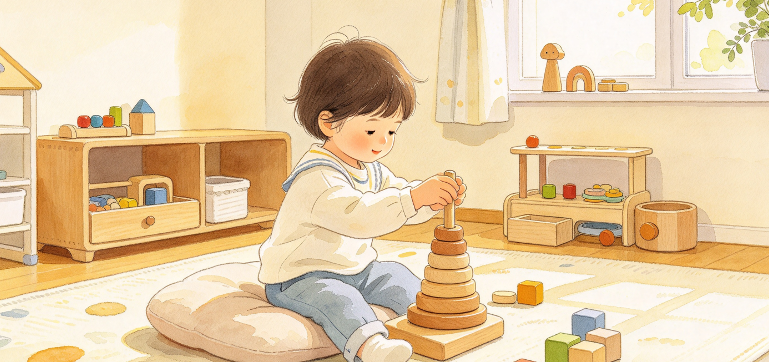
Why wooden toys suit sensory-sensitive play.
Wooden toys are predictable. A block is a block. It does not suddenly flash, beep, or change shape. It has a consistent weight, texture, and temperature. For a child who finds the world overstimulating, that consistency is calming. It reduces surprise. It allows focus. Muted colors and natural grain are easier on the eyes than neon plastic. The quiet click of wood is softer than an electronic jingle. Many OKEYKIDS products follow Montessori-inspired principles: natural textures, muted colors, simple forms. These design choices were not made with sensory sensitivity in mind, but they happen to serve it well.
Safety matters even more here.
Children with sensory differences often mouth, chew, or handle toys more intensely. Some seek deep pressure. Some are less cautious. This makes material safety critical. Every OKEYKIDS product is tested to EN71 and ASTM F963 standards. We use water-based paints and child-safe finishes. Edges are rounded. Small parts are checked and rechecked. Batch records are kept. If a toy does not pass, it does not ship. For parents in this market, those details are not marketing. They are the reason they buy.
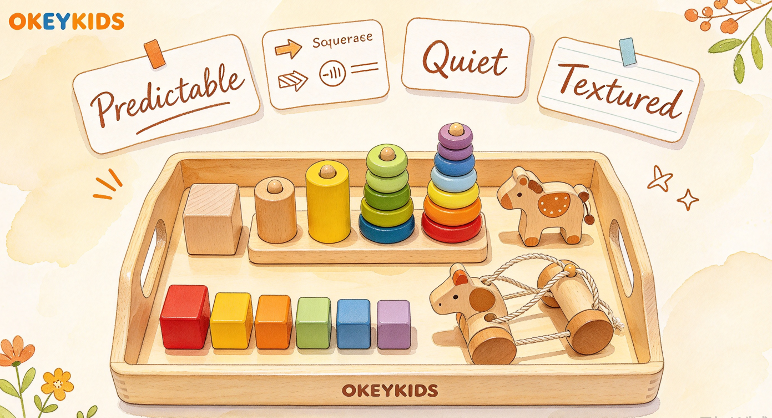
What this means for buyers and retailers.
This market is underserved. Parents of sensory-sensitive children often struggle to find toys that fit. They rely on specialist retailers, therapy clinics, and parent communities. They are willing to pay more for products that work. They value clear information about materials, finishes, and age grading. A wooden toy line positioned for inclusive play can reach a loyal, repeat-buying audience. For therapists, preschools, and special education suppliers, wooden toys are already standard equipment. The demand is there. The supply is thinner than it should be.
Practical advice for positioning.
If you want to serve this market, be specific, not vague. Say what the toy is made of. Say how it is finished. Say what age it suits. Avoid claiming therapeutic benefits you cannot support. Instead, describe the play experience: quiet, tactile, open-ended, predictable. Offer simple, clear packaging. Include care instructions. Let the product speak honestly. Parents in this community are careful readers. They reward transparency.
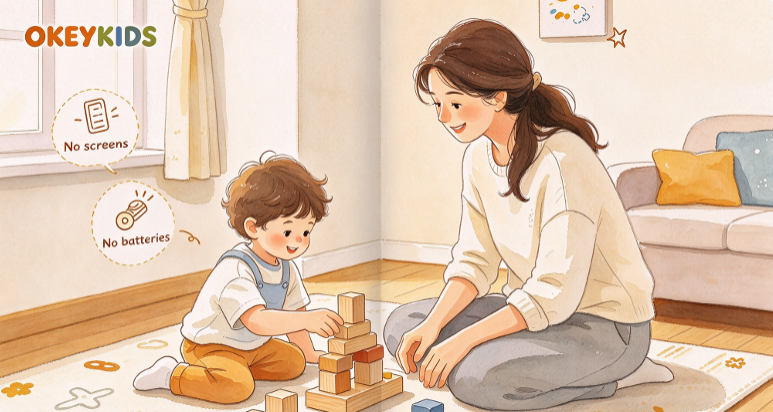
For brands and retailers, this is a market built on trust, not trends. For OEM/ODM buyers, we can adjust materials, finishes, age grading, packaging, and branding to match your audience. Because design, sampling, production, and quality control work under one roof, you get fewer middlemen and clearer answers. Whether you are building a line for specialist retailers, therapy settings, or inclusive family play, we can support you from concept to carton.
If you are sourcing wooden toys for sensory-sensitive children, explore OKEYKIDS at https://www.okeykids.com/ or request our catalog. We would be glad to show you how we work.


